Land's Ability to Store Carbon Has Bounced Back Strongly After Two Terrible Years
Earth's land absorbed 2.36 gigatonnes of carbon in 2025 — 0.71Gt above the recent average — as tropical forests recovered from El Niño and the Amazon fires. Scientists warn a record super El Niño could slam the sink down again next year.
By NewsFlow Editorial Team••10 min read•Source: New Scientist
For two years, climate scientists watched one of the planet's most important life-support systems falter. Since 2023, the amount of carbon dioxide absorbed by Earth's forests, grasslands and swamps had dropped dramatically under assault from extreme weather, producing record jumps in atmospheric CO2 in two successive years — and raising fears that the land carbon sink was collapsing decades earlier than expected.
Now there is good news. Preliminary research shows that 2025 bucked the worrying trend decisively: the land carbon sink has rebounded strongly, and the growth rate of atmospheric CO2 has fallen back in response. Tropical forests, above all, have roared back to life. But the scientists behind the analysis are quick to add a caveat — a super El Niño now building in the Pacific could slam the sink back down again as early as next year.
What the land carbon sink does
Terrestrial ecosystems are constantly breathing. As forests and grasslands grow, they pull CO2 out of the atmosphere; when plants decompose or burn, they release it back. Over recent decades, the balance has tilted toward absorption: warmer temperatures and the fertilising effect of extra CO2 itself have boosted plant growth, so the land has tended to soak up more carbon than it emits. Combined with the oceans, natural sinks have removed more than half of all the CO2 humans have emitted — a vast, free subsidy to the climate that has kept warming measurably lower than it would otherwise be.
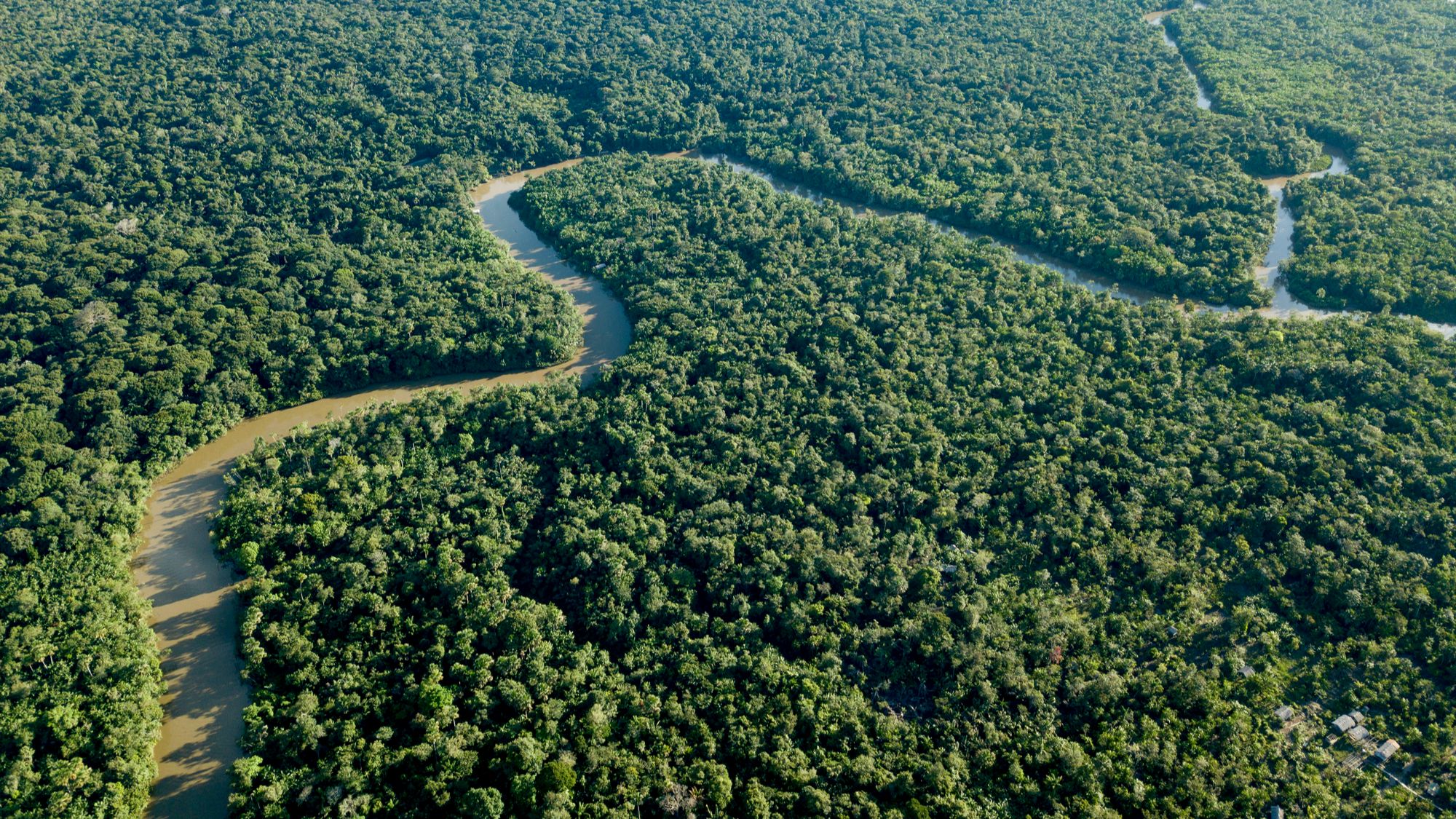
Tropical forests drove the 2025 rebound, recovering their carbon uptake as growing conditions normalised.
But the sink is not a constant. It varies in strength from year to year, swinging with droughts, heatwaves, fires and the great oceanic climate cycles of El Niño and La Niña. And in 2023 and 2024, the swings turned violent.
Two terrible years
"In 2023 and 2024, because of El Niño and the Amazon fires, we had the almost cancellation of the global land sink," says Philippe Ciais of the Climate and Environment Sciences Laboratory in France, who led the new analysis. "This cancellation led to a very high CO2 growth rate, because if CO2 is not taken by land, it stays in the atmosphere."
The numbers were stark. El Niño brought searing heat and drought to the tropics, stressing forests across the Amazon, central Africa and South-East Asia. Massive fires swept the Amazon, turning one of the world's great carbon stores into a carbon source. The result was the near-total disappearance of the land sink — and atmospheric CO2 concentrations leapt by record amounts in both years.
The sudden vanishing act genuinely frightened researchers. Climate models have long projected that the land biosphere will eventually flip from being a net carbon sink to a net carbon source — but not for several decades, and only if emissions keep rising. The 2023–2024 collapse raised the terrifying possibility that the flip was happening early, decades ahead of schedule.
The 2025 rebound
It was not. Ciais and his colleagues estimate that the land sink absorbed 2.36 gigatonnes of carbon in 2025 — a full 0.71 gigatonnes more than the average for 2015 to 2022. The growth rate of atmospheric CO2, which had spiked to alarming levels, eased back accordingly.
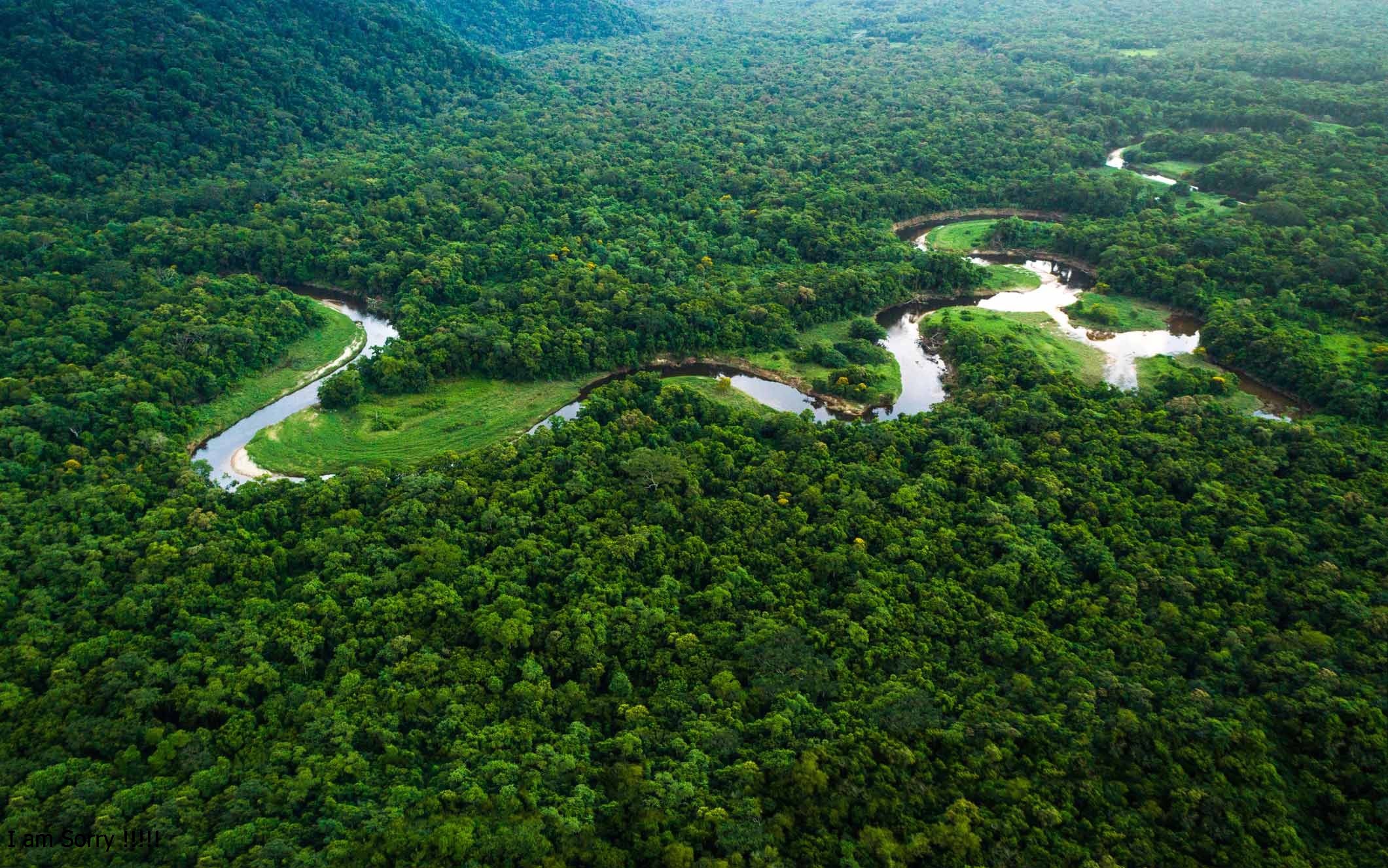
With more normal rainfall returning to Africa and the Amazon, forests rapidly regained their carbon-absorbing capacity.
The recovery was driven largely by a dramatic return of growth in tropical forests. "The climate became more normal, especially in Africa and the Amazon, so the plants recovered their carbon uptake capacity," Ciais explains. With rains returning and extreme heat abating, the great green engines of the tropics did what they have done for millennia: they grew, and in growing, they pulled carbon from the sky.
"2024 was an extreme year," says team member Mike O'Sullivan of the University of Exeter. The "massive recovery" in 2025 is therefore genuinely good news, he says — proof that the biosphere retains a remarkable capacity to bounce back from climate shocks. But he warns against reading it as a clean bill of health: "We don't know if this recovery can be sustained indefinitely, especially if weather patterns become increasingly extreme."
The El Niño gathering on the horizon
That warning is not abstract. A super El Niño is already under way in the Pacific, and it is expected to become the most intense in recorded history later this year. El Niño's signature is extreme heat and drought across the tropics — precisely the conditions that strangled the land sink in 2023 and 2024. Crucial sinks such as the Amazon rainforest are directly in the firing line.
The researchers therefore expect another sharp slump in carbon uptake next year. The pattern is becoming depressingly familiar: a climate shock knocks the sink down, the biosphere recovers the following year, and then the next shock arrives. "The land is showing short-term resilience," O'Sullivan says. "There is a short-term shock, which is the El Niño, and it is recovering the year after. There is strong evidence of that happening. What it doesn't mean is that the land is going to maintain long-term resilience to climate change."
There is evidence the repeated battering is already taking a toll. Researchers estimate that the global land sink is now about 25 per cent smaller than it would have been without the combined effects of climate change and natural variability. Each cycle of shock and recovery may be ratcheting the baseline downward — the forest comes back, but not quite all the way.
Why this matters for climate targets
The stakes go far beyond academic curiosity. Almost every pathway to holding global warming to 1.5°C or 2°C assumes that natural carbon sinks keep absorbing a large fraction of humanity's emissions for decades to come. If the land sink weakens faster than expected — or flips to a source — the remaining carbon budget shrinks, and the cuts in fossil-fuel emissions needed to stay within temperature limits get steeper and more urgent.
The 2025 rebound buys time and eases the immediate fear of an early collapse, but it changes nothing about the underlying task. Atmospheric CO2 is still rising; the rebound only slowed its growth. The sink's recovery was driven by weather, not by any reduction in human emissions. And with a record El Niño bearing down, 2026 could easily deliver another grim data point.
For households, the same logic applies at a smaller scale: cutting your own emissions still matters whatever the forests do. Anyone weighing rooftop solar, a heat pump or other green home upgrades can model the monthly repayments with the loan/EMI calculator before committing.
The deeper lesson of the new analysis is that the planet's carbon cycle is more volatile — and more vulnerable — than the smooth curves of climate models suggest. The land showed in 2025 that it can still bounce back. The question is how many more punches it can take.
Source: New Scientist — "The land's ability to store carbon has bounced back strongly after two terrible years" (13 October 2026).
FAQs
What exactly is the land carbon sink?
The land carbon sink is the net amount of CO2 absorbed each year by terrestrial ecosystems — mainly forests, grasslands, savannas and wetlands — as plants photosynthesise and grow. Together with the ocean sink, natural systems have removed more than half of humanity's CO2 emissions, substantially slowing global warming. The land sink alone typically absorbs several gigatonnes of carbon annually, but its strength swings widely with weather: droughts, heatwaves and fires can slash uptake, while wet, mild years boost it.
What caused the sink to nearly vanish in 2023 and 2024?
A powerful El Niño brought extreme heat and prolonged drought to the tropics, crippling photosynthesis across the Amazon, central Africa and South-East Asia, while vast fires — particularly in the Amazon — released huge quantities of stored carbon. The combination amounted to what researchers describe as the near-cancellation of the global land sink. With the land absorbing almost nothing, human emissions accumulated in the atmosphere unchecked, producing record annual jumps in CO2 concentrations in both years.
Why did the sink rebound so strongly in 2025?
Growing conditions simply returned closer to normal. Rains came back to the Amazon and central Africa, extreme heat eased, and tropical forests — which dominate the global land sink — resumed vigorous growth, recovering their carbon uptake capacity. The analysis estimates 2.36 gigatonnes of carbon absorbed in 2025, about 0.71 gigatonnes above the 2015–2022 average. It is a weather-driven recovery, not the result of any fall in human emissions, which is why scientists treat it as a reprieve rather than a turning point.
Does the rebound mean climate change is slowing down?
No. Atmospheric CO2 concentrations are still rising — the rebound only reduced the rate of increase. Global temperatures continue to climb, driven by cumulative emissions, and a single good year for forests does not alter the long-term trajectory. Worse, the analysis finds the land sink is already about 25 per cent weaker than it would be without climate change and natural variability, and models still project it will flip from sink to source within decades unless emissions fall sharply. The rebound is good news about resilience, not about the climate's direction.
What does the coming super El Niño mean for next year?
The super El Niño now developing in the Pacific is forecast to become the strongest on record later this year, bringing intense heat and drought to the Amazon and other tropical sinks. Researchers expect carbon uptake to slump sharply again in 2026 as a result. The emerging pattern — shock, recovery, shock — suggests the land sink is entering an era of violent volatility, and each cycle may leave it slightly weaker than before. For climate policy, the implication is stark: carbon budgets that assume a stable, healthy land sink may be over-optimistic.
🤖 This article was rewritten by Feed and Figures' editorial AI from a report originally published by New Scientist. Facts and quotes are preserved from the original; the rewrite focuses on clarity and structure. For the unedited original, see the source link below.